
The Enneagram Hexad
How the Enneagram Reveals the
Hidden Dynamics of the Psychological Self
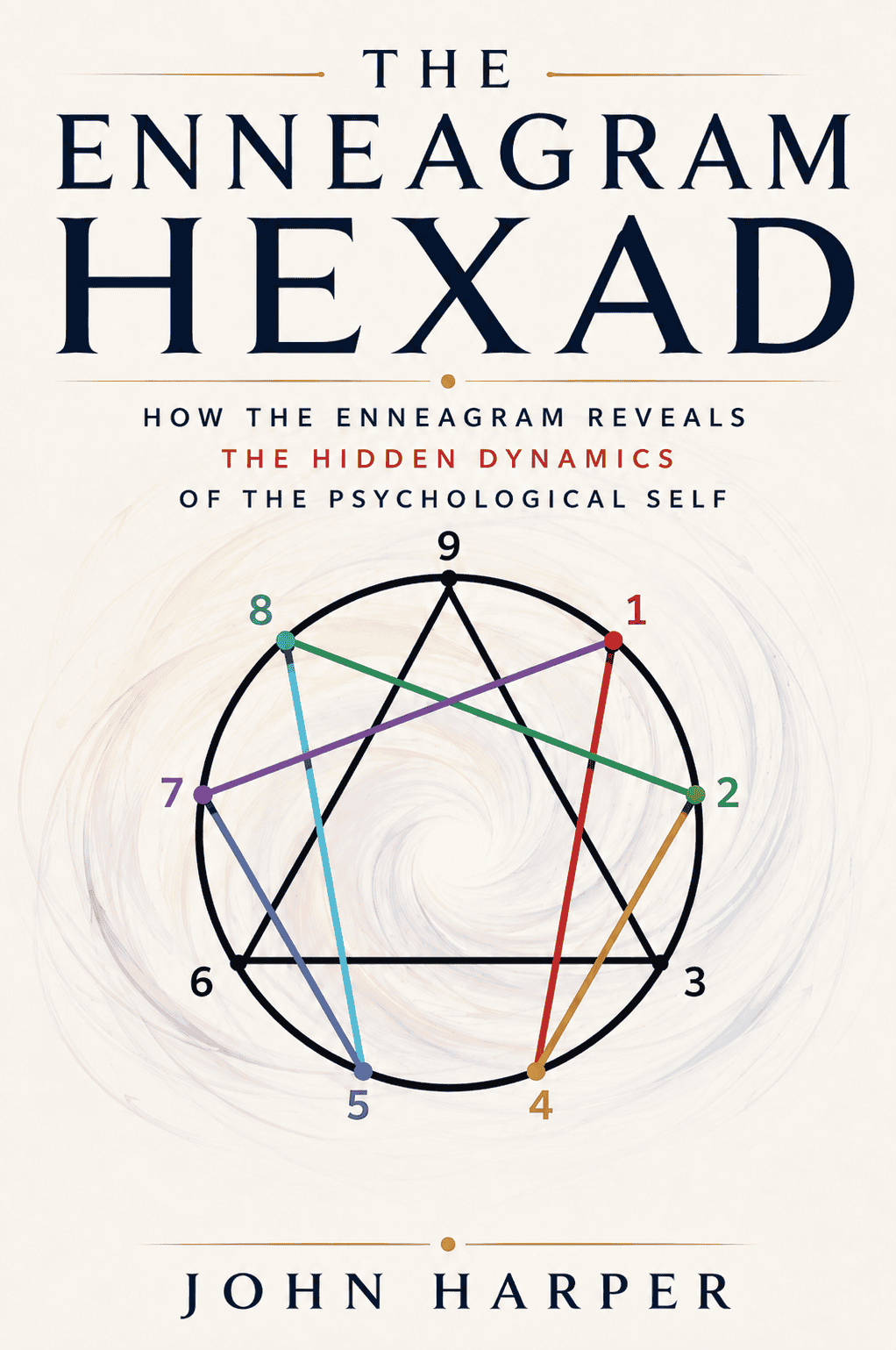
The Enneagram Hexad explores the Enneagram’s six-point figure as a living process. Following its directional movement, 1 → 4 → 2 → 8 → 5 → 7 → 1, the book explores how perception, emotion, relationship, bodily response, and attention organize into the familiar experience of being someone. What we call personality takes shape through these movements and continues through their repetition.
THE CENTRAL QUESTION
How does experience become the person I take myself to be?
We recognize familiar patterns in how we think, feel, relate, and respond. Beneath those patterns, an ongoing process determines what we notice, what we can tolerate, which responses become available, and what feels like me.
The Enneagram Hexad follows this process as it happens. It examines how psychological organization develops, acquires stability, and continually recreates the identity we ordinarily take for granted.
WHAT YOU’LL DISCOVER
The movement beneath personality
The hexad connects six fundamental functions of human experience: Determination, Individuation, Relationship, Autonomy, Containment, and Expansion. Each function receives what has developed before it, changes what it receives, and contributes to what follows. Their interacting tensions help organize a human life.
Six functions active in everyone
The six points represent capacities participating in every person’s experience. Defining something, feeling its personal significance, entering relationship, acting, holding experience, and opening toward possibility all belong to ordinary life.
How the body participates
Psychological organization includes muscular tension, breathing, activation, inhibition, and readiness to act. The body can reveal a response before we consciously recognize what is happening.
How familiar ranges develop
Through repeated experience, we learn which forms of closeness, independence, feeling, action, uncertainty, and possibility we can sustain. These preferred ranges become coordinated, giving personality its recognizable continuity.
What defense restores
Explaining, withdrawing, accommodating, controlling, and generating possibilities can help restore a familiar psychological position. The same capacity can support contact in one situation and preserve a defensive pattern in another.
Why change can preserve the same identity
Thoughts, relationships, circumstances, and behavior can change while a familiar organization persists. The book calls this dynamic inertia: stability maintained through continual movement and adjustment.
How Presence changes the process
When the familiar response does not immediately complete, a gap can open. Presence can participate more explicitly in the unfolding experience, allowing a continuation that the established pattern could not supply.
KEY CONCEPTS
Questions the book investigates
What does the hexad reveal?
The hexad reveals relationships among six functions that organize experience. Its directional sequence shows how one movement conditions the next, while its tension fields help explain how the psychological self develops and maintains continuity. The book explores these relationships through development, everyday encounters, embodied observation, and inquiry.
What is a tension field?
A tension field is the living relationship between two connected functions. Individuation and Relationship, for example, involve the capacity to remain distinct while participating in contact. We can feel this tension when expressing a difference brings concern about losing connection. Each field contains possibilities that our familiar organization may find easy, difficult, or threatening to inhabit.
What are preferred ranges?
Preferred ranges are the regions of experience we have learned to inhabit with relative familiarity. Their edges become apparent when an encounter brings more intimacy, independence, uncertainty, pleasure, or responsibility than we can readily sustain. Charge gathers, and a response begins preparing to bring experience back within range.
How does organization become identity?
Repeated patterns of perception, feeling, bodily response, and relationship gradually acquire the felt certainty of this is who I am. We experience the world through this organization, often without noticing its participation. The book follows how a process occurring within consciousness becomes experienced as the person having the experience.
Ready to observe the process in your experience?
The Enneagram Hexad brings attention to the movements through which the psychological self forms and continues. Its practical explorations invite you to feel these movements in ordinary situations, recognize the impulse to restore familiarity, and discover what becomes possible when Presence participates.
Buy the BookRead the FAQs · Read the Introduction · View the Table of Contents